Living in Mesa has its advantages – warm winters, low humidity, and plenty of sunshine. But when monsoon season hits or a pipe bursts behind a wall, water damage can turn a normal Tuesday into a nightmare. Most homeowners have no idea how fast the damage spreads or what to do in those critical first hours.
We have helped hundreds of families across the Mesa and Phoenix area recover from water damage, and the same questions come up every time. This post answers them honestly.
Why water damage gets worse the longer you wait
Water does not stay where it lands. Within minutes it is moving – soaking into drywall, traveling along floor joists, wicking up baseboards. Within 24 hours, mold spores that are always present in the air start to find a home in that moisture. Within 72 hours, what could have been a straightforward drying job starts becoming a demolition and rebuild.
The Federal Emergency Management Agency has detailed guidance on flood recovery that is worth reading – you can find it at fema.gov/flood-maps. Their data on how quickly secondary damage compounds is sobering.
If you want to understand exactly what happens inside your walls during this window, our detailed guide on water damage restoration in Mesa walks through the full timeline with photos from real jobs we have completed.
The steps that actually matter in the first few hours
Shut off the water source if you can find it. Turn off electricity to any area where water is present – do not walk through standing water near outlets or panels. Then take out your phone and record a video of every affected room before you touch anything. That video is what your insurance adjuster will ask for.
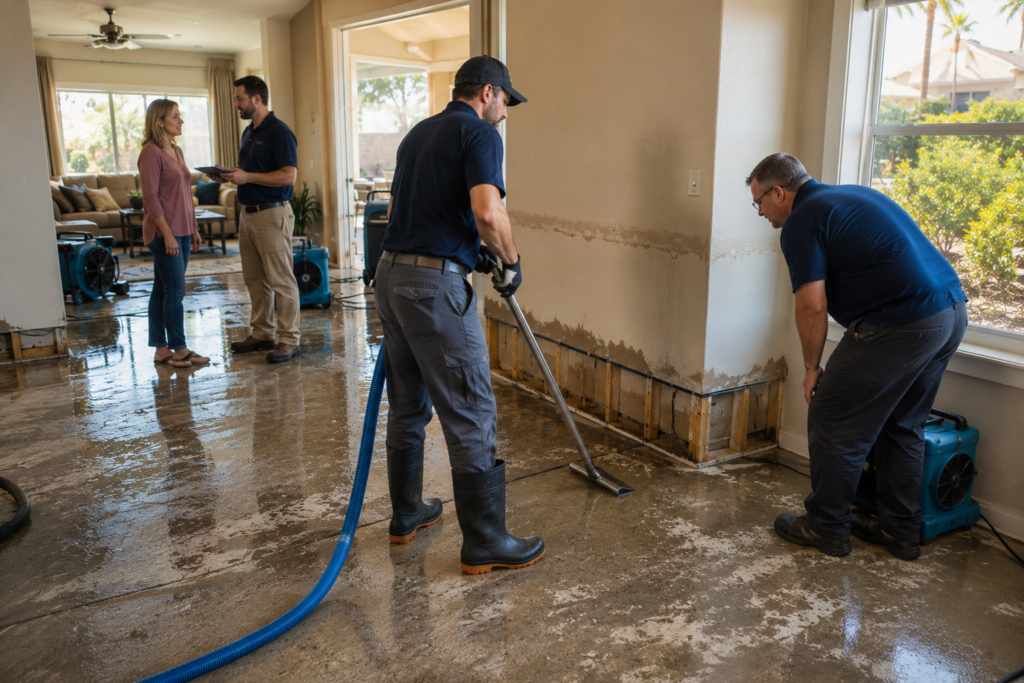
After that, remove as much standing water as you can with whatever you have – a wet-dry vacuum, towels, a mop. Then get air moving. Open windows, run fans, turn on the AC. Every bit of airflow slows down the mold clock.
We have put together a full emergency checklist on our Mesa water damage emergency response page – it covers exactly what to do in order, including what to tell your insurance company when you call.
When household tools are not enough
Here is the honest truth that most people do not hear until it is too late. A wet surface that looks and feels dry can still have significant moisture trapped inside the wall cavity behind it. Regular fans dry what they can reach. Commercial drying equipment pulls moisture out of places you cannot see.
If the water reached your walls, got under your flooring, or came from outside – floodwater, storm drainage, sewage backup – you need professional equipment quickly.
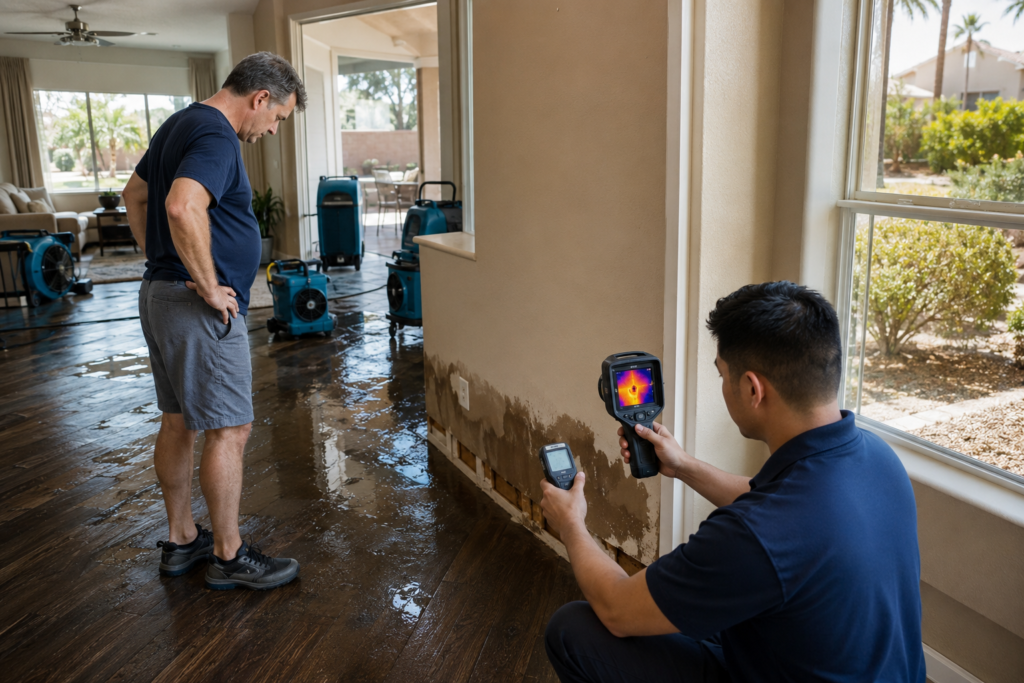
Our water damage restoration services in Mesa include commercial air movers, industrial dehumidifiers, and thermal imaging cameras that show moisture behind walls without cutting anything open. Most homeowners are surprised at how much water is hiding where they cannot see it.
What we see most often in Mesa homes
The most common calls we get are monsoon flooding through doors and windows, water heater failures in garages, and slow leaks behind refrigerators or washing machines that nobody noticed for weeks. That last category causes the most damage because by the time it is visible, moisture has been sitting inside walls for a long time.
Sewage backups are another call we handle regularly – and they require a completely different approach than clean water damage. You can read more about how we handle that on our emergency water damage cleanup page.
If you are dealing with any of these right now, our team is available around the clock. We bring commercial equipment, document moisture readings for your insurer, and handle everything from extraction through final restoration.
A note for homeowners outside Arizon
We get calls from people across the country who found this site while searching for help. If you are not in the Mesa area, we cannot serve you directly – but we do not want to leave you without a resource.
For anyone dealing with water damage along the Gulf Coast, particularly in Alabama, the team at Mobile AL Water Damage handles exactly these situations. Gulf Coast flooding comes with its own challenges – higher baseline humidity, hurricane-related storm surge, and soil conditions that affect how water moves through a foundation. They know that environment and they respond the same way we do here quickly, with the right equipment.
Mold – the hidden damage most people miss
Even after the visible water is gone, the real threat is often just getting started. Mold does not need much – a little moisture trapped inside a wall cavity and the right temperature is enough. Mesa summers provide plenty of heat, which actually accelerates mold growth in damp materials.
If your home has had any water event in the past few weeks and you are noticing a musty smell, discoloration on walls, or anyone in the house has developed unexplained respiratory symptoms, do not ignore it. Our mold inspection and remediation service in Mesa uses air quality testing to confirm whether mold is present before recommending any treatment.
The one thing that makes the biggest difference
Speed. Everything else – the right equipment, the insurance documentation, the proper drying protocol – all of it matters. But none of it matters as much as calling someone the moment you realize water has entered your home. An hour of hesitation at the start can mean days of additional work at the end.
While restoration methods are similar across the country, local climate conditions can influence the recovery process. Homeowners in Arizona often deal with monsoon-related water intrusion, while Gulf Coast properties face higher humidity and storm-related flooding. In either case, a rapid response remains the most important factor in reducing damage and preventing mold growth.
Leave a Reply