
If you’ve lived in Mesa for a few summers, you know the feeling. You step outside at 4 PM and the sky to the southeast is doing something it wasn’t doing an hour ago. The temperature drops a few degrees. The wind shifts. And then, sometimes in under thirty minutes, the whole East Valley is getting hammered.
Arizona monsoons are genuinely unlike anything most people from other states have experienced. They’re not slow-building nor’easters or multi-day soaking rains. They’re fast, violent, and they drop enormous amounts of water in a very short window – sometimes two or three inches in less than an hour in a localized area. For Mesa homeowners, that speed is exactly what makes them dangerous.
Why flash flooding is different from a slow leak
Most home water damage people deal with – a dripping pipe, a water heater that gives out, an appliance hose that finally splits – happens slowly enough that there’s some warning. You notice a soft spot in the floor. You see a stain forming on the ceiling. You get a chance to respond before things get bad.
Monsoon flooding doesn’t work that way.
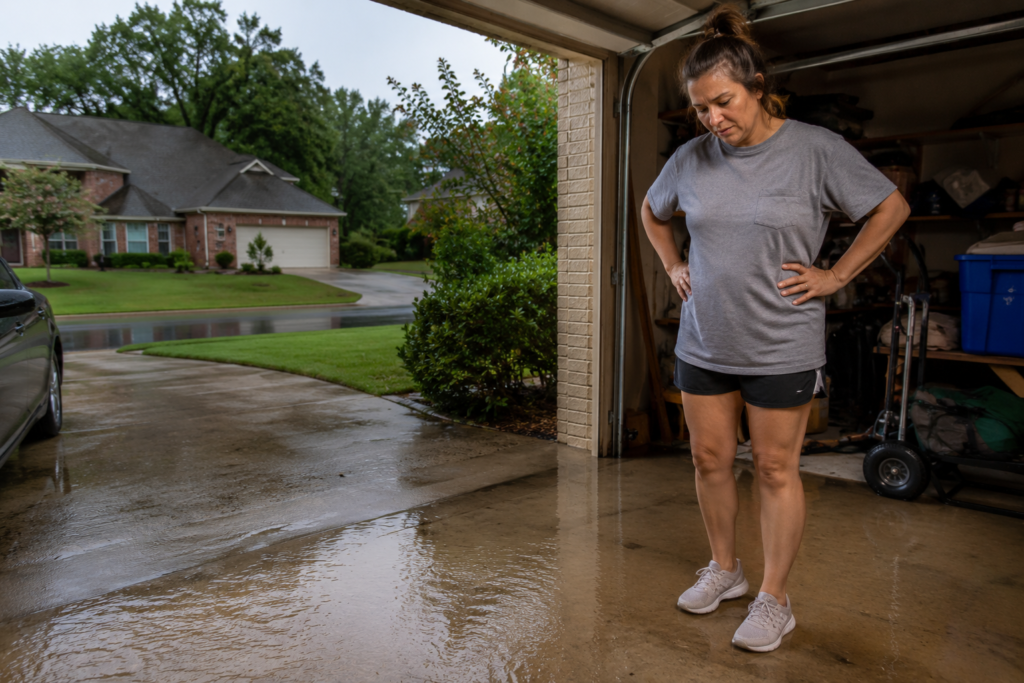
When a storm drops two inches of rain on Mesa in 45 minutes, the drainage system gets overwhelmed almost immediately. Streets flood. Parking lots become ponds. And water that has nowhere else to go starts finding the lowest point it can – which, in a lot of cases, is your garage, your back patio entry, or any door or window that isn’t fully sealed at the base.
The challenge is that the entire event might last 90 minutes. By the time the storm passes and you walk through your house to assess the damage, water has already been sitting on your flooring for an hour. In Arizona’s summer heat – even with rain, interior temperatures stay warm – that’s enough time for the conditions that lead to mold to start developing inside any materials that got wet.
What actually gets damaged in a monsoon event – and what doesn’t
Not every part of your home is equally vulnerable. Here’s what we typically see after a storm cleanup call in Mesa:
Garage floors and entries. The garage is usually the first casualty. Most Mesa homes have concrete garage floors with a slight slope toward the street, but if water is flowing toward the house faster than it’s draining away, it piles up at the door threshold. Older garage door seals are especially vulnerable. Once water gets in, it soaks into any drywall at the base of interior garage walls and into stored items on the floor.
Back patio sliding door entries. These are the second most common entry point. Sliding door tracks don’t seal like a traditional door threshold, and if your back patio doesn’t drain quickly enough, water backs up against the glass and finds its way under the track.
Block walls and stucco exteriors. Mesa has a lot of block wall construction, and while block holds up well structurally, the mortar joints absorb water during heavy rain. In most cases this doesn’t cause interior damage, but if there are cracks in the exterior stucco – which is very common on homes over 15-20 years old – water can work its way through to the interior framing.
Roof penetrations. Monsoon storms often come with strong straight-line winds before the rain. Those winds push water horizontally, which means it gets under flashing, around vent boots, and into any roof penetration that isn’t perfectly sealed. A roof that looks fine in normal conditions can let in a surprising amount of water during a hard-driven storm.
What usually doesn’t get damaged: Interior plumbing, HVAC systems, and second floors in two-story homes. The risk is almost entirely at ground level and at exterior envelope penetrations.
The dehumidification question most Mesa homeowners get wrong
Here’s something that surprises a lot of people: Mesa’s desert climate, which is normally bone dry, actually works against you during monsoon cleanup.
In Phoenix’s regular dry season, if you got a small amount of water on your floor, you could reasonably open the windows and run a fan and the dry desert air would handle it. The ambient humidity is so low that evaporation happens fast.
But during monsoon season, the humidity changes completely. When storms roll in, outdoor relative humidity can jump from the typical 15–20% up to 60–70% or higher. That means the air outside your house is actually carrying more moisture than you want inside your home during cleanup. Opening windows in this situation pulls humid air in and slows down drying rather than speeding it up.
This is why professional dehumidification equipment matters specifically in monsoon-related water damage – not just to remove the water that came in, but to counteract the outdoor humidity that would otherwise slow the drying process. Industrial desiccant dehumidifiers work independently of outdoor humidity levels, which consumer units and open-window strategies simply can’t match.
Monsoon cleanup versus regular storm cleanup – the timeline is tighter
The 24-hour mold risk that applies to water damage in most climates applies even faster in Mesa during summer months. Here’s why: mold needs warmth, moisture, and an organic food source. Interior temps in Mesa homes stay at or above 75–80°F year-round. Monsoon flooding provides the moisture. Drywall paper, wood framing, and carpet backing provide the food source.
That combination means the effective response window is shorter than it is in cooler climates. In Minneapolis or Trenton, you might have 36–48 hours before mold becomes a serious concern. In Mesa in July, you’re looking at 18–24 hours, possibly less if the affected area is in direct sun or near HVAC return vents that recirculate warm air.
This is a genuine difference between desert climate water damage and what happens in other parts of the country – and it’s one reason why calling for professional extraction the same day as the event matters so much here.
Speaking of regional differences: the team at Mobile AL Water Damage Restoration deals with a similar urgency on the Gulf Coast, where summer heat and high baseline humidity push the mold clock even faster than Mesa’s monsoon season does. Their experience mirrors what we see here – the jobs that go smoothly are the ones where the homeowner didn’t wait to see if it dried on its own.
What to do immediately after a monsoon flood in your Mesa home
The storm has passed. Here’s a practical sequence:
1. Wait for lightning to clear before going outside to assess. Monsoon storms move fast but the lightning can linger. Give it 20-30 minutes after the last visible lightning before walking around the exterior.
2. Check the exterior first, before entering affected rooms. Look at your drainage paths – is water still pooling against the house? If yes, address that before focusing inside.
3. Safety check before stepping into standing water. If there’s water in the garage or any room with an outlet, appliance, or electrical panel, do not enter until you’ve confirmed power is off to that area.
4. Document everything before moving anything. Photos and video of the standing water, the water line on walls, and affected belongings. Do this before you start mopping – your insurance claim depends on it.
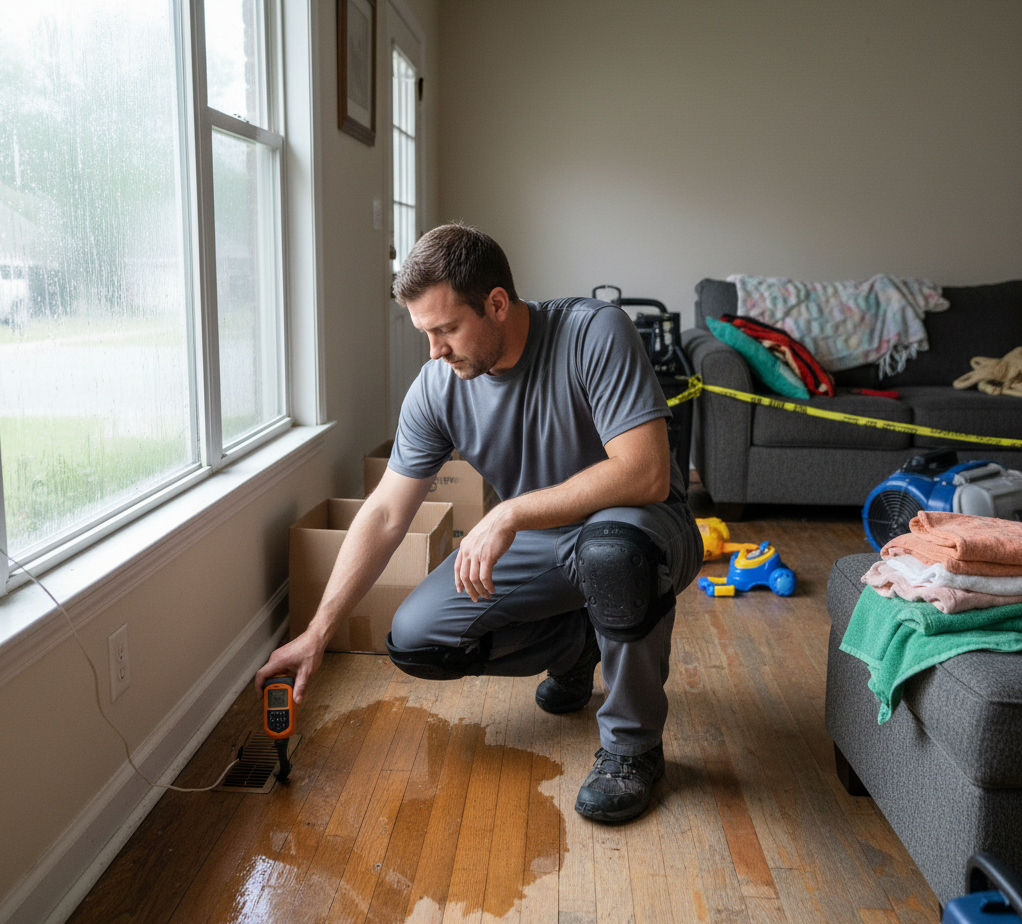
5. Start extraction. If you have a wet/dry shop vac, use it. Every gallon you remove in the first hour is a gallon that’s not soaking deeper into your subfloor or wicking up your drywall.
6. Call for professional drying the same day. We run calls 24/7 because monsoon events don’t happen on a schedule. The extraction is step one; the professional drying with moisture meters and industrial dehumidifiers is what actually gets your home back to safe moisture levels.
A note on insurance and monsoon damage
Standard homeowners insurance in Arizona typically covers sudden and accidental water damage that comes through your roof or windows – meaning monsoon-driven rain entering through a compromised roof penetration or damaged window seal is generally covered.
What’s typically not covered is overland flooding – water that enters because it rose up from the ground and flowed in under your door. That requires separate flood insurance, which most Mesa homeowners don’t carry because the area isn’t designated as a high-risk flood zone.
This distinction matters when you file a claim. An adjuster will ask how the water entered, and the difference between “wind-driven rain through a damaged roof vent” and “floodwater from outside that came under the door” can determine whether your claim is approved.
If you’re unsure which category your event falls into, document everything and let us do the assessment before you make assumptions about coverage. We work with insurance claims regularly and can help you understand what you’re looking at.
When the season is right here
Mesa’s monsoon season runs roughly from mid-June through September. We’re in it now. If you haven’t done a pre-season check on your garage door seal, your sliding door threshold, your roof flashings, and the drainage grade around your foundation, now is the time – before the first big storm of the season, not after.
And if you’re reading this because a storm already came through and you’re standing in a damp garage trying to decide what to do next – call us at (480) 806-2607. We’re available right now.
Water Damage Restoration Mesa serves Mesa, AZ and surrounding East Valley communities including Gilbert, Chandler, Tempe, and Apache Junction. Licensed, insured, 24/7 emergency response.
Leave a Reply