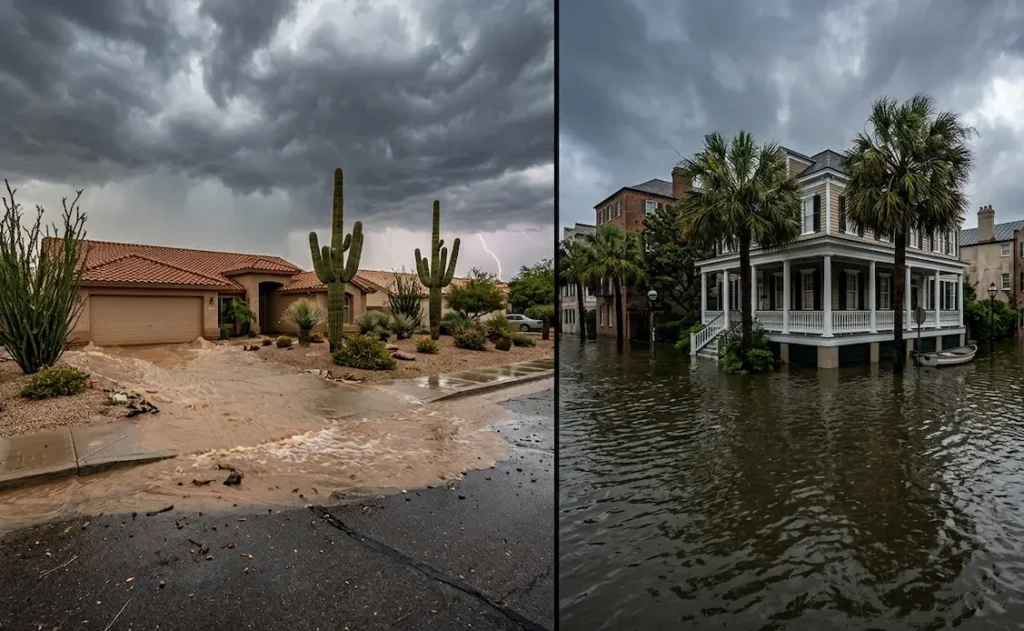
Water damage restoration Mesa AZ homeowners face is a completely different challenge from what coastal cities like Charleston SC deal with, and treating them the same way is one of the most expensive mistakes a homeowner can make. The source of the flooding, the local climate, the building materials, and the speed at which mold develops all vary dramatically between a desert city like Mesa and a coastal city like Charleston, South Carolina.
If you have ever wondered why restoration timelines and costs seem unpredictable, this guide explains exactly what makes each environment unique, and why understanding those differences leads to faster recovery and lower overall costs.
Why the Same Flooding Looks Different in Mesa and Charleston
Most homeowners assume that water damage follows a simple formula. Pull the water out, dry everything, move on. That works for minor incidents, but for any significant flooding event, regional context changes almost every decision a restoration crew makes.
Here is what drives the difference between desert and coastal flooding:
- Humidity levels affect how quickly mold colonizes wet materials. Mesa AZ sits in the Sonoran Desert with average humidity below 30%, which gives homeowners a slightly longer window to act. Charleston SC, on the other hand, maintains humidity above 70% year-round, meaning mold can begin forming in wall cavities within 18 to 24 hours of water exposure.
- Flood source matters more than most people realize. In Mesa, flooding typically comes from monsoon storms, burst pipes stressed by hard water mineral buildup, or appliance failures. In Charleston, flooding regularly comes from tidal surge, hurricane storm systems, and what locals call “sunny day flooding,” where rising sea levels push water back through storm drains even without rain.
- Soil and drainage behave completely differently. Desert soil in Mesa absorbs moisture relatively quickly when dry, but during a monsoon event, hardpan caliche layers prevent deep absorption and force water to pool at ground level and against foundations fast. Charleston sits on lowland soil at sea level, where water has nowhere to drain and stays against structures for hours after a flood event passes.
Understanding these differences is not just interesting, it is practical. It determines which equipment gets deployed, how long drying takes, and whether mold remediation becomes part of the job from day one or shows up as a secondary problem weeks later.
Water Damage Restoration Mesa AZ: What the Desert Does to Your Home
Mesa homeowners deal with a specific combination of water risks that most people outside Arizona do not fully appreciate. The city sits in a region where months of almost zero rainfall are followed by sudden, intense monsoon storms that drop significant rain in a very short window. Drainage systems that have been completely dry simply cannot process that volume of water fast enough.
The result is rapid localized flooding that pushes water under doors, through foundation cracks, and into garages and lower-level living spaces before most families have any time to respond.
Beyond storm events, Mesa homes face a hidden threat from the region’s hard water. Arizona tap water carries high mineral content that deposits inside pipes over years, creating buildup that weakens pipe walls. Water heater connections and supply lines in older Mesa homes are particularly vulnerable, and failures often happen without warning, releasing water inside walls or under flooring where it stays invisible until the damage is already significant.
Our flood damage assessment process starts by mapping exactly where moisture has traveled, because in a desert home, water does not always go where you expect it to. Dense materials like tile and concrete slab foundations hold heat, which means moisture underneath them behaves differently than in wood-framed coastal homes.
After any significant water event in Mesa, the structural drying process is the most critical phase. Desert air, while low in humidity, still allows mold to develop inside wall cavities if structural materials stay wet for more than 48 hours. Industrial air movers and desiccant dehumidifiers running together create the controlled drying environment that actually removes moisture from inside the structure, not just from the surface.
For homes where flooding reached carpet or hardwood areas, our carpet cleaning restoration and hardwood floor repair services address the material-specific drying requirements that general drying equipment cannot handle alone.
Coastal Flooding in Charleston SC: A Different Kind of Emergency
Charleston, South Carolina presents water damage challenges that are genuinely unique in the United States. The city sits where the Ashley, Cooper, and Wando rivers converge at the Atlantic coast, with large portions of the historic district and surrounding neighborhoods resting just a few feet above sea level.
When water enters a Charleston home, it frequently carries more than just moisture. Storm surge and tidal flooding bring sediment, bacteria, and saltwater contamination that classify the event as Category 2 or Category 3 water under IICRC standards. That changes the entire cleanup protocol, because contaminated water cannot be handled the same way as a clean water pipe burst.
Saltwater intrusion creates an additional layer of damage that freshwater flooding simply does not. Salt accelerates corrosion of metal fasteners, electrical systems, and HVAC components at a rate that continues long after visible drying is complete. It also draws moisture back into materials during humid weather cycles, which is why Charleston homes treated with standard drying protocols sometimes show mold or structural issues weeks after the initial restoration appeared finished.
For homeowners in the Charleston area dealing with these specific challenges, specialized water damage restoration Charleston SC professionals who understand coastal flood patterns provide a meaningfully different outcome than general restoration companies without coastal experience.
According to FEMA’s National Flood Insurance Program data, South Carolina coastal counties consistently rank among the highest in the country for flood insurance claims per capita, which reflects just how frequently and seriously these events affect residential properties in the region.
What Both Cities Share: The 48-Hour Window
Despite everything that separates desert and coastal flooding, one rule applies equally in Mesa and Charleston. The first 48 hours after any water event determine most of the final restoration outcome.
Waiting until the next morning, finishing the work week, or hoping the damage dries on its own are decisions that consistently turn manageable restoration jobs into major structural repairs. Here is what actually happens during those first 48 hours:
- Wet drywall begins breaking down structurally and absorbing mold spores from ambient air
- Subfloor materials lose dimensional stability and begin cupping or warping
- Metal fasteners in framing begin to corrode where saltwater or contaminated water is present
- Odor compounds from bacteria begin bonding to wall surfaces and becoming significantly harder to eliminate
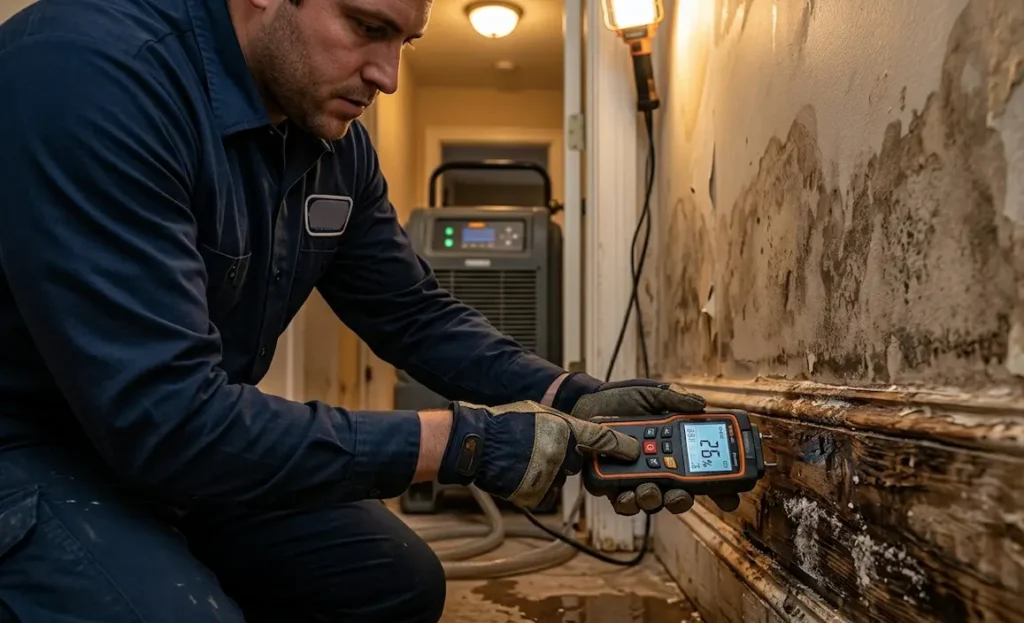
Professional restoration crews bring equipment that genuinely changes these timelines, including moisture meters that read inside walls without tearing them open, thermal imaging cameras that map hidden water migration, and commercial-grade extraction and drying systems that residential equipment simply cannot match.
If you are in Mesa or anywhere in the East Valley and dealing with water damage right now, call our team at (480) 806-2607. We respond 24 hours a day, 7 days a week, and arrive ready to work.
Choosing the Right Restoration Company for Your Region
Not every restoration company is built to handle every type of flooding. Before agreeing to any work, ask these specific questions:
- Do they carry current IICRC certification?
- Do they have direct experience with your specific flood type, whether that is monsoon runoff, pipe failure, coastal storm surge, or tidal flooding?
- Do they provide a written scope of work with itemized costs before starting any extraction or drying?
- Are they genuinely available 24 hours a day including weekends and holidays?
A company that cannot answer yes to all four of those questions is not the right company for a significant water damage event in either Mesa or Charleston.
For Mesa homeowners, our team has been serving the East Valley for over 15 years with the local knowledge and certified equipment that desert flooding demands. Reach out through our contact page for a free same-day assessment, or call (480) 806-2607 right now iIf you need water damage restoration Mesa AZ services right now, our team is available 24 hours a day, 7 days a week across the entire East Valley.
Leave a Reply