When water damage hits your Mesa home, the first instinct is often to head to the local rental store for air movers and dehumidifiers. It seems like the fastest, cheapest fix – grab some equipment, plug it in, and let it run for a few days. But water damage drying is more technical than it looks, and renting the wrong equipment, or not enough of it, can actually slow down drying time and let mold take hold before you even realize there’s a problem.
This guide walks through what proper drying actually requires, what rental really costs once everything is factored in, and when it makes sense to call in a professional team instead.
Why Arizona’s Climate Makes This Decision Trickier
Mesa’s dry heat creates a strange trap: surface materials like carpet or drywall can feel dry to the touch within a day, while moisture is still trapped deep inside wall cavities, subfloor, or insulation. This is especially true after monsoon flooding, when water intrudes fast and gets pushed into places a surface-level rental setup won’t reach. Homeowners often stop running rented equipment too early because everything “looks” dry, only to discover mold growth behind baseboards weeks later.
What Equipment Does Water Damage Drying Actually Require?
Proper structural drying isn’t just about pointing a fan at wet carpet. A typical mid-size room affected by water damage needs a combination of equipment working together, not just one unit running in a corner.
Air movers. Most affected rooms need 3-4 air movers positioned to create cross-circulation across wet surfaces – walls, flooring, and baseboards. A single fan from a hardware store doesn’t generate anywhere near the airflow needed to move moisture out of saturated materials.
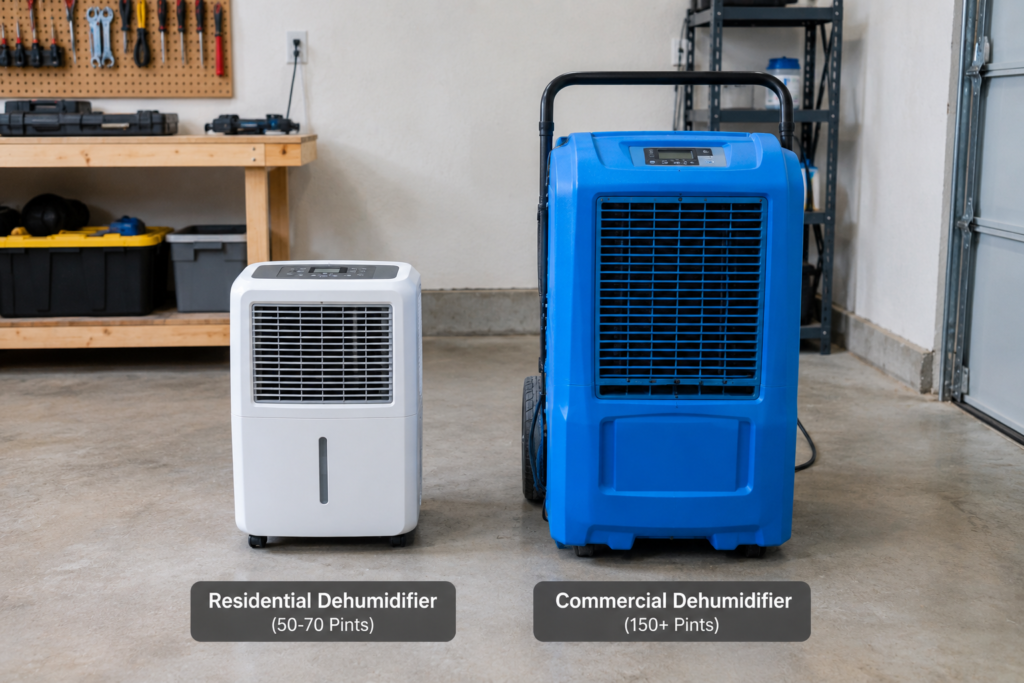
Commercial-grade dehumidifiers. These need to be sized to the square footage and humidity load of the space, not just “any dehumidifier.” An undersized unit will run constantly without ever pulling enough moisture from the air, which extends drying time significantly.
Moisture meters. These track drying progress inside walls, subfloor, and framing – not just how the surface feels. Without one, there’s no real way to know when a space is actually dry versus just dry-looking.
Air scrubbers. If mold spores or contaminated water are involved, air scrubbers filter airborne particles that plain circulation can’t handle.
Most big-box rental stores carry consumer-grade equipment that isn’t built for this kind of job. A single residential dehumidifier, for example, often can’t keep up with the moisture load from a burst pipe, which means drying stretches from 3 days to 10 or more. That extra week is exactly when mold starts growing behind drywall where nobody’s checking.
The Real Cost of DIY Equipment Rental
Rental pricing in the Mesa area typically breaks down like this:
| Equipment | Typical Daily Rate |
|---|---|
| Air mover (per unit) | $35-50/day |
| Commercial dehumidifier | $75-150/day |
| Moisture meter (if available to rent) | $20-30/day |
| Air scrubber | $60-90/day |
For a standard 3-day drying job needing 4 air movers and 2 commercial dehumidifiers, that’s roughly $750-1,000 in rental fees alone. Add delivery charges, a security deposit, and fuel or pickup time, and the total climbs further. That’s before factoring in the risk of under-drying and needing mold remediation later, which typically costs far more than the equipment rental itself.
A professional restoration team brings correctly-sized equipment as part of the service, with monitoring included, often for a comparable or lower total cost once you account for what happens if drying goes wrong.
When DIY Rental Can Actually Work
To be fair, equipment rental isn’t always the wrong call. It can make sense for:
- Very small, contained incidents – a single overflowing sink with no standing water
- Situations where you’re supplementing professional structural drying already underway, at a technician’s direction
- Minor humidity control unrelated to active water damage, like a persistently damp closet
If you’re dealing with anything involving standing water, saturated carpet padding, or water that’s touched drywall for more than a few hours, DIY rental usually isn’t enough on its own, no matter how many units you bring in.
Signs You Need Professional-Grade Equipment, Not a Rental Counter
- Water has been sitting for more than 24-48 hours
- The affected area spans more than one room
- You notice a musty smell forming – an early mold sign covered in our guide on hidden water damage signs
- A crawl space or subfloor is involved, which needs specialized drying access that standard rental units aren’t designed for
- You’re dealing with contaminated water, such as a sewage backup or appliance overflow with standing water
- You’re unsure of the full extent of the damage – a proper flood damage assessment catches issues a rental customer would never think to check for
What Professional Equipment Rental Actually Includes
When you call a restoration team instead of a rental counter, you’re not just getting equipment – you’re getting units correctly sized for your square footage and humidity load, daily moisture monitoring so drying doesn’t stop too early or run longer than necessary, and technicians trained to catch secondary damage, like moisture trapped behind baseboards or inside wall cavities, that a rental customer would never spot on their own. This is part of why our emergency response process includes equipment as standard rather than a separate rental line item.
Common Mistakes People Make With Rented Equipment
Even with the right units, DIY setups often go wrong in predictable ways: turning equipment off too early because surfaces feel dry, placing air movers too far apart to create real cross-circulation, running a single dehumidifier in a space that needs two or three, and skipping moisture readings inside walls entirely because there’s no meter to check with. Each of these mistakes buys time for mold to establish itself, which turns a drying job into a much bigger remediation project.
Frequently Asked Questions
Can I just rent one dehumidifier for the whole house?
No. Dehumidifiers are sized to specific square footage and moisture load. One unit covering multiple rooms will run constantly without meaningfully drying any of them.
How long should I run rented equipment?
Until moisture meter readings confirm materials are dry, not until surfaces look or feel dry. This is usually 3-5 days for a contained incident, longer for larger areas.
Is it cheaper to buy equipment instead of renting?
For a one-time incident, no. Commercial-grade air movers and dehumidifiers cost hundreds to thousands of dollars new, and they need maintenance and calibration to work correctly.
Get the Right Equipment the First Time
Guessing at equipment needs during a water damage emergency often costs more time and money than it saves. If you’re weighing equipment rental against calling in a professional team, we’re happy to walk you through what your specific situation actually needs, no obligation.
Call our Mesa team now at (480) 806-2607 for an on-site assessment and same-day equipment deployment if needed.
Leave a Reply